






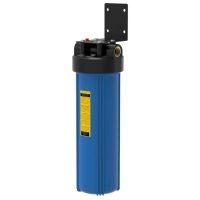
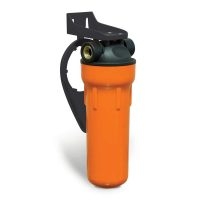
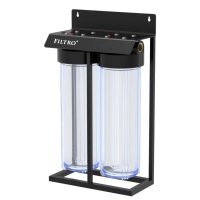
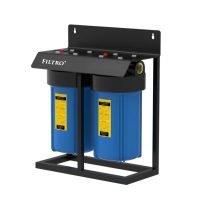
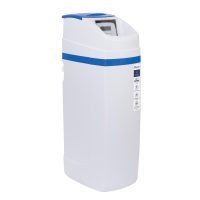

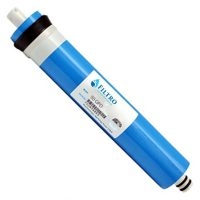




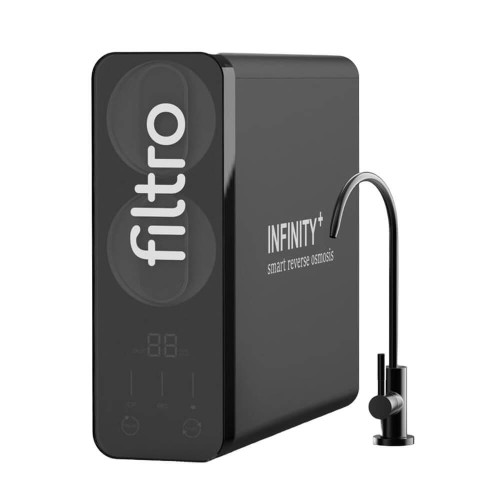
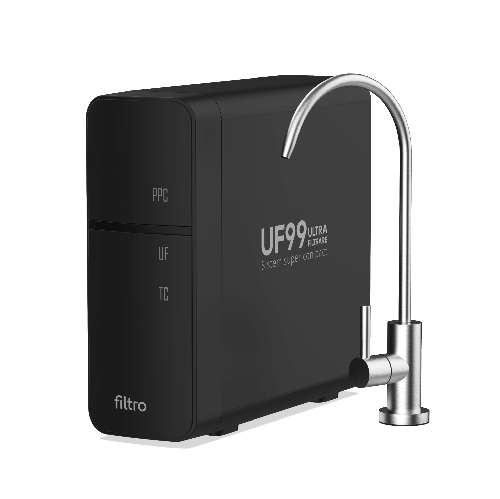
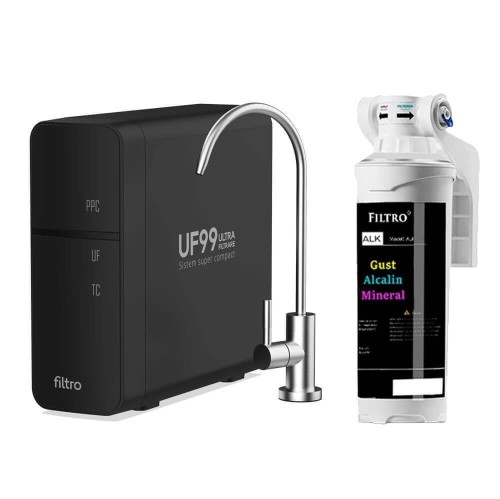
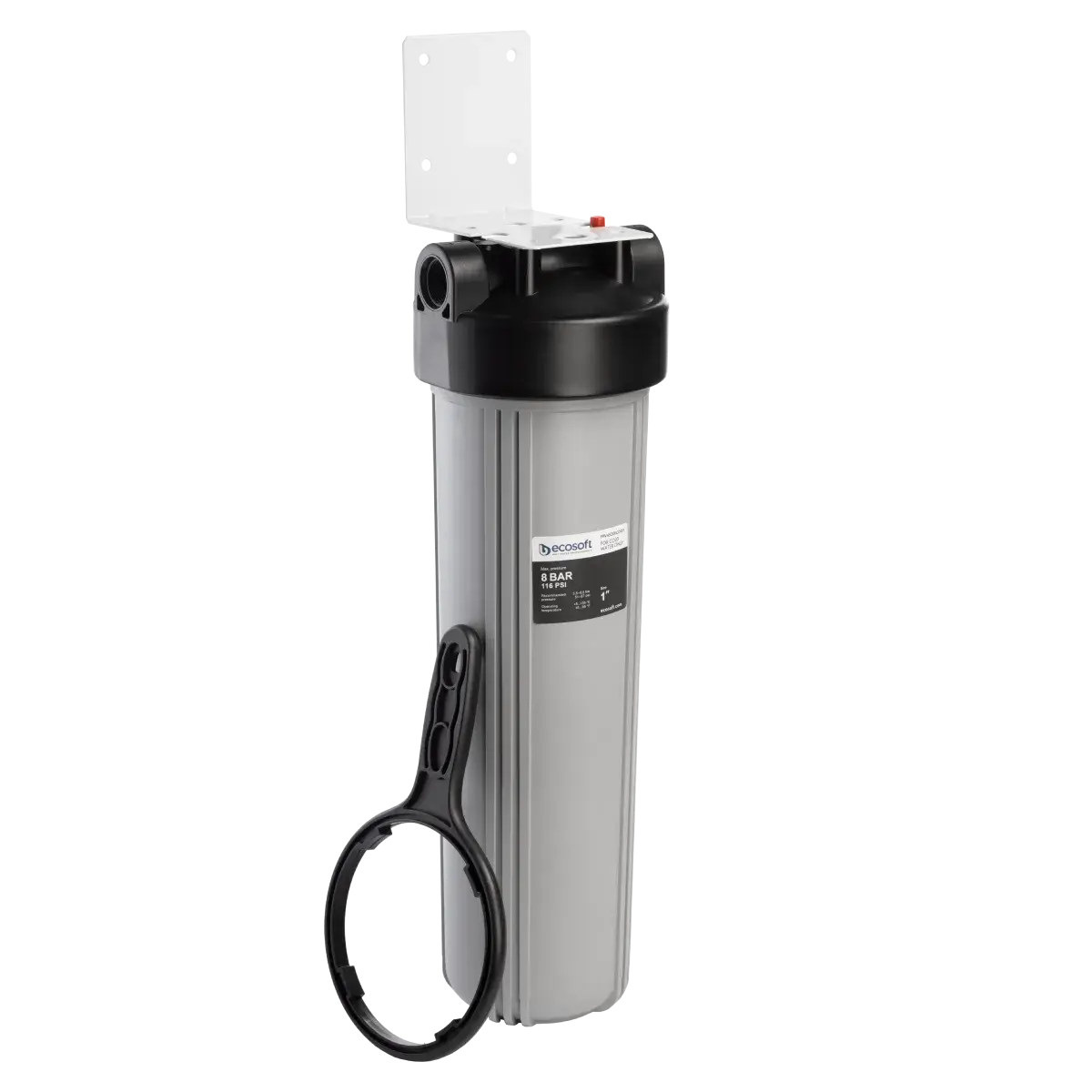
Have you ever wondered whether the water flowing directly from the tap in your home in Romania is actually safe to drink? Many of us turn to plastic bottles or water filters, either out of pure distrust or for real reasons. But is this fear justified? Let's take a look at what studies and specialists say about tap water quality in our country and how using water filters is the primary solution to make tap water safe to drink.
Studies show the following:
-
Only 12% of Romanians consider the tap water in their area to be very safe, according to a recent study.
-
Almost half of Romanians buy bottled water monthly, and many use filters to ensure their water is safe to consume.
-
Distrust in water quality is often linked to a lack of information; only 13% of Romanians regularly seek information on this topic.
-
Water companies and local authorities face a lack of trust from four in ten Romanians.
-
Romania faces significant water losses in its distribution network, reaching approximately 40%, which places us among the last countries in Europe.
What does drinking water mean and what are the quality standards?
When we talk about drinking water, we refer to water that can be drunk, used for cooking or washing vegetables, without posing health risks. To guarantee its safety, this water must comply with strict limits established by legislation – both at national and European level. To ensure that tap water is safe, using a water filter is the most effective method.
Drinking water quality standards cover more than 50 parameters, including:
-
Physico-chemical parameters: pH, hardness, nitrate and nitrite levels, residual chlorine, heavy metals, etc.
-
Organic substances: pesticides, detergents, volatile organic compounds
-
Microbiological parameters: coliform bacteria, E. coli, enterococci
Here is a simple summary of the common limits for a few key parameters:
|
Parameter
|
Maximum permissible limit*
|
|
pH
|
6.5 – 9.5
|
|
Nitrates
|
50 mg/l
|
|
Nitrites
|
0.5 mg/l
|
|
Residual chlorine
|
0.5 mg/l
|
|
Coliform bacteria
|
0/100 ml
|
*According to the current national legislation
What gives tap water its “potable” status is, in fact, the result of a constant cycle of drinking water checks and chemical and bacteriological analyses. Authorities set these standards precisely so that, regardless of where you live, you can use tap water directly without worry. However, for added safety and to eliminate any trace of impurities, using a water filter is recommended.
Although the rules are clear, the reality on the ground depends on the state of the supply infrastructure, the investments made by companies in the market, and how these drinking water checks are put into practice at a local level. A quality water filter can compensate for any deficiencies in the distribution network.
Even if the term “drinking water” seems simple, it conceals an entire set of procedures, regulations, and monitoring systems designed to keep the water we drink clean and safe at all times. Water filters represent an additional guarantee of safety.
How is tap water quality monitored in Romania?
Behind the water that flows from the tap, there are monitoring procedures and technologies that operate day after day, often without us realising it. Every source is checked in detail to ensure it is safe for all consumers. But who carries out these checks and what responsibilities exist in this process? Let's take a closer look. To enjoy safe water, we recommend using water filters.
The role of health and environmental authorities
Authorities in Romania continuously check tap water. Among the main institutions involved are the Public Health Directorates (DSP) in each county and the Environmental Protection Agencies. Their main role is:
-
Periodic sampling from public water supply networks
-
Analysis of chemical and microbiological parameters in accredited laboratories
-
Publishing water quality results on official websites
-
Intervening in cases of accidental contamination or exceedance of maximum permissible limits
Another important aspect relates to the supervision of European standards. The entire system operates according to rules established by the European Union, and the DSP monitors compliance with these.
|
Institution involved
|
Primary responsibility
|
|
Public Health Directorate (DSP)
|
Sanitary control and quality testing
|
|
Environmental Protection Agency
|
Monitoring ecological impact
|
|
Ministry of Health
|
Establishing norms and general legislation
|
Independent checks by authorities help consumers get a realistic picture of water quality, even if, in practice, only a small portion of the population accesses such reports. To ensure your water is safe, a water filter is a smart investment.
The responsibility of water companies
In addition to authorities, the companies that supply water play a huge role. These companies (public or private) must comply with legislation and carry out their own tests quite frequently:
-
Daily or even multiple times a day, they take samples directly from the source or from the distribution network
-
They check key parameters: pH, residual chlorine, bacteria, nitrates, heavy metals
-
They draw up periodic reports that are submitted to the authorities
-
They immediately notify consumers in the event of identified problems
A recent example of water company involvement is the initiative to offer free water testing for restaurants and cafés, as part of a programme aimed at increasing trust in local water – an initiative also supported by legal regulations such as Law 96/2024. For regular households, there are also recommendations regarding testing water hardness at home or using filters to protect appliances such as water softeners. Water filters are essential to guarantee safe consumption.
What results are seen in practice?
-
Annual and emergency reports are published transparently
-
In large cities, there are information lines for any water-related issue
-
There are educational campaigns, but the public's level of awareness remains low
The fact that there are two layers of control – authorities and companies – helps in the rapid detection of any potential issues, although the reality is that many Romanians still do not fully trust the safety of tap water, possibly also due to a lack of information or past incidents.
In conclusion, monitoring drinking water in Romania is a continuous process, with clear roles for each party involved. Although testing and checks are rigorous, public trust also depends greatly on how this data does or does not reach each of us. To ensure your water is safe, invest in a water filter.
Analysis of the main drinking water parameters
To understand whether tap water is actually good to drink, we need to look at what is being measured. It's not just about taste or smell, but about a series of indicators that tell us whether the water is safe for our health. Authorities and water companies constantly monitor these parameters, and the results help us get a clear picture.
Physico-chemical parameters (pH, hardness, nitrates, chlorine, etc.)
These are, in a sense, the water's “characteristics”. pH, for example, tells us how acidic or alkaline the water is. A normal pH, somewhere between 6.5 and 8.5, is preferable. Hardness, which comes from minerals such as calcium and magnesium, is not necessarily a health risk, but it can affect taste and leave deposits in pipes. Too many nitrates can be a problem, especially for babies, and chlorine, used for disinfection, must be within acceptable limits so as not to cause harm or an unpleasant taste. A high-performance water purifier can remove nitrates and residual chlorine, ensuring safer and better-tasting water.
|
Parameter
|
Recommended value
|
Possible impact
|
|
pH
|
6.5 - 8.5
|
Taste, corrosion
|
|
Hardness (mg CaCO₃/L)
|
100 - 300
|
Deposits, taste
|
|
Nitrates (mg/L)
|
< 50
|
Health risk (especially for babies)
|
|
Free residual chlorine (mg/L)
|
0.1 - 0.5
|
Disinfection, taste
|
Microbiological parameters (bacteria, viruses)
Here we enter more serious territory, related to the presence of microorganisms that can make us ill. Bacteria such as E. coli or coliforms are important indicators of possible contamination. Their presence in water means that the water has not been properly treated or that there has been a breach in the distribution system. Viruses can be equally dangerous, although they are harder to detect. Regular testing for these contaminants is vital. For example, a drinking water analysis in Bucharest, as in any other major city, focuses heavily on these indicators to protect public health. An effective water filter is crucial for eliminating bacteria and viruses, ensuring safe water for consumption.
-
Constant monitoring: Laboratories periodically check water samples to detect any trace of contamination.
-
Effective treatment: Water treatment plants use various methods to eliminate bacteria and viruses.
-
Distribution network: Attention is paid to the integrity of pipes to prevent microorganisms from entering from the soil.
Distrust in tap water quality, even when analyses show it is drinkable, leads to additional expenditure for families, whether on filters or bottled water. This highlights the importance of transparent communication from authorities and water companies. Water filters offer a practical and effective solution to ensure that the water you consume is safe.
In conclusion, physico-chemical and microbiological parameters are essential for determining the safety of the water we drink. Authorities have the responsibility to ensure that these standards are met, and we, as consumers, should be informed about what truly constitutes quality water.
Potential risks and contaminants in tap water
Even though the water that reaches our taps is treated and checked, it is not entirely free of risks. Sometimes problems can arise along the way, from the treatment plant to the kitchen sink. It's good to know what to expect, so we can make the best decisions for our health and that of our families.
Contamination from natural sources
The water we drink ultimately comes from natural sources: rivers, lakes, groundwater. These sources can be affected by various environmental factors. For example, groundwater can absorb minerals from the soil, such as iron or manganese, which, although not necessarily dangerous in small quantities, can affect the taste and appearance of the water. In agricultural areas, there is also the risk of nitrates from fertilisers reaching the water table. Heavy rainfall can increase the turbidity of surface water sources, bringing with it sediment or even microorganisms.
-
Nitrates: Can come from agricultural activities or animal waste. Long-term consumption of water with a high nitrate content can be dangerous, especially for infants.
-
Heavy metals: Although less common, they can appear from natural sources or from industrial activities upstream. These can accumulate in the body and cause serious health problems.
-
Organic substances: Originating from the decomposition of plant matter, they can affect the taste and smell of water and can contribute to the formation of unwanted compounds during chlorine treatment.
Contamination from the distribution network
Once water has left the treatment plant, it travels through a complex network of pipes. Other problems can arise here. Old pipes, especially those made of materials that can corrode, can release metallic particles into the water or allow contaminants to enter. Repairs or interventions in the network can also create vulnerable points. Even a small crack in a pipe can allow soil water, which may contain bacteria or other impurities, to seep in. Water filters exist to retain metallic particles, bacteria, and other impurities that may enter the distribution network.
Distrust in the safety of tap water is quite widespread in Romania. A recent study shows that only 12% of Romanians consider the water in their region to be “very safe”. Many resort to filters or buy bottled water, generating additional costs.
-
Pipe corrosion: Especially in older networks, the materials from which pipes are made (iron, lead) can release harmful substances into the water.
-
Bacteria and microorganisms: Can enter the network through faults or during interventions, if hygiene is not properly observed.
-
Chemical substances: In rare cases, chemicals from the soil can reach the distribution network through cracks or unsealed connections.
The safety of tap water therefore depends not only on the quality of the initial treatment, but also on the integrity of the entire distribution system. The risks associated with tap water, while not omnipresent, require constant attention from authorities and accurate information for consumers.
Tips for consumers in Romania: How to ensure water quality?
Drinking water quality in Romania remains a widely discussed and even sensitive topic for many consumers. Despite the fact that authorities carry out regular monitoring, many Romanians hesitate to drink tap water, preferring filters or bottled water. If you want to have more confidence in what comes out of your tap, here are a few easy-to-implement tips: using water filters is the primary solution.
-
Stay regularly informed about the water quality in your area. Most water companies publish detailed analyses of the basic parameters of the water they supply on their websites.
-
Use filters suited to your needs – whether at tap level or for the whole home, depending on the type of impurities or hardness you suspect.
-
Pay attention to any sudden change in smell, colour, or taste – these can signal interventions, faults, or temporary works on the network. Do not consume visibly cloudy water or water with a strong smell until you are certain of the source of the problem. A water filter will protect you from these issues.
-
Try to obtain recent analysis reports – these can be requested from water companies and, in many cases, are provided free of charge on request. Once you have the analyses, contact FILTRO experts to receive personalised recommendations.
-
Consider annual testing of your tap water (especially if you live in a house or have your own well), particularly for critical parameters: nitrates, nitrites, bacteria.
An indicative table of Romanian consumers' trust levels and behaviours related to drinking water quality in Romania:
|
Behaviour
|
Estimated percentage (%)
|
|
Consider local water "very safe"
|
12
|
|
Use filters systematically
|
30
|
|
Regularly buy bottled water
|
46
|
|
Spend nothing on alternatives
|
5
|
Before assuming that your water is not suitable for consumption, try to get information directly from the source or request independent tests.
By following these simple habits, you can have greater confidence in drinking water quality in Romania and, who knows, you might finally stop worrying about buying bottled water! Investing in a water filter is the best decision for your health.
Conclusions: Is tap water safe in Romania?
After analysing quality parameters, monitoring, and potential risks, we can draw a conclusion. In general, tap water in Romania meets the potability standards required by national and European legislation. This means that, technically and legally, it is safe for consumption. Health and environmental authorities, together with water companies, have the responsibility to ensure that the water reaching our taps is properly treated and periodically tested. However, to eliminate any trace of impurities and ensure maximum protection, using water filters is the primary solution.
Nevertheless, recent studies show a significant gap between technical reality and public perception. Only a small percentage of Romanians (around 12%) consider tap water in their own region to be “very safe”. This distrust leads to additional expenditure on alternatives such as bottled water or filters, costs that can amount to over 100 lei per month for many of us. Furthermore, the level of awareness about water quality is quite low, and a significant portion of the population does not trust official information.
The significant water losses from the distribution network, estimated at approximately 40%, represent a serious problem, not only from an economic standpoint, but also as an indicator of the state of the infrastructure. These losses can, theoretically, affect water quality during transportation to the consumer, even if it has been properly treated at the source. To compensate for these risks, you can filter your water.
What does this mean for us, as consumers?
-
Stay informed: Look for water analysis reports for your locality, published by water companies or local authorities. Don't rely solely on rumours. Choose correct and professional filtration equipment.
-
Check your sources: If you have major doubts, you can request additional analyses or use recognised, quality water filters.
-
Be aware of costs: Analyse how much you spend monthly on bottled water and compare it with the cost of a filtration solution or the benefits of drinking tap water. Water filters are a long-term investment in your health.
In conclusion, although tap water is largely safe in terms of compliance with standards, public perception and issues related to the distribution infrastructure require attention. This is an area where trust is built through transparency, accurate information, and continuous investment in network modernisation.
What does all this mean for us?
So, how do we stand with tap water in Romania? The truth is it's a more complicated topic than it seems. On one hand, authorities and water companies say the water is safe, constantly tested, and good to drink. On the other hand, many of us don't really trust it. Studies show that only a small percentage of Romanians consider tap water “very safe” in their area. This leads us to spend money on filters or bottled water, which is neither economical nor ecological. Moreover, it seems we are not very well informed about water quality, and we don't place much trust in what we're told. Another weak point is the significant water loss from the distribution system, around 40%, which is substantial. So, even if the water that reaches the tap is generally fine, there is still much to improve in terms of infrastructure and, above all, in terms of public trust.
Frequently Asked Questions
What does it mean that tap water is “potable”?
Potable water is clean water that won't make you ill and that you can drink without worry. It must comply with strict rules to be safe for our health. These rules relate to how clean it is in terms of taste, smell, and colour, as well as the substances it contains. To ensure that tap water is potable and safe, we recommend using water filters.
Who ensures that tap water in Romania is safe to drink?
Several institutions check the water. Health and environmental authorities ensure that laws are complied with, and the companies that bring water to our taps are required to test it continuously and ensure it is in order. Even with these checks in place, using water filters is the safest method to protect yourself.
What types of checks are carried out on the water?
Water is analysed from multiple perspectives. Checks are made to ensure the pH is appropriate, that it is not too “hard” (hardness), and that it does not contain too many nitrates or too much chlorine. Microbiological tests are also carried out to ensure there are no dangerous bacteria or viruses. Water filters are designed to eliminate these contaminants, providing additional protection.
Can there be dangerous substances in tap water?
Yes, there is a possibility. Sometimes water can become contaminated from natural sources (for example, if it passes through soils with certain minerals) or due to problems with the pipes through which it reaches us at home. This is why constant monitoring is important. Using water filters is the primary solution for eliminating these dangerous substances.
Why do many Romanians not trust tap water?
One reason is the lack of information. Many people don't know how water is checked or don't trust what the authorities say. Some have also had unpleasant experiences or simply prefer bottled water, even if it means extra expenditure. Water filters offer a safe and cost-effective alternative.
What can I do to make sure I'm drinking good water?
You can find out where the water in your locality comes from and look for information about its quality. If you have doubts, you can use a water filter at home or boil the water before drinking it. However, in many areas of Romania, tap water is safe. Using a water filter is the most effective and safe method of ensuring you drink the highest quality water.