








Categories
  • FILTRO Family
    FILTRO Family

    FILTRO Family


    Reverse Osmosis: Everything You Need to Know About Water Quality

    Discover everything about reverse osmosis: how it works, what it filters, and what the advantages and disadvantages are. Find out if it's right for you!

    We set out to explore together what reverse osmosis really means and how it can help us have better water at home. We've gathered information about how it works, what it removes and what it doesn't, so we can understand whether it's right for us. We'll also discuss what maintenance and installation involve, as well as when other methods might be sufficient. We hope you find it useful!

    Key Takeaways

    • Reverse osmosis purifies water through a very fine membrane, removing many impurities.

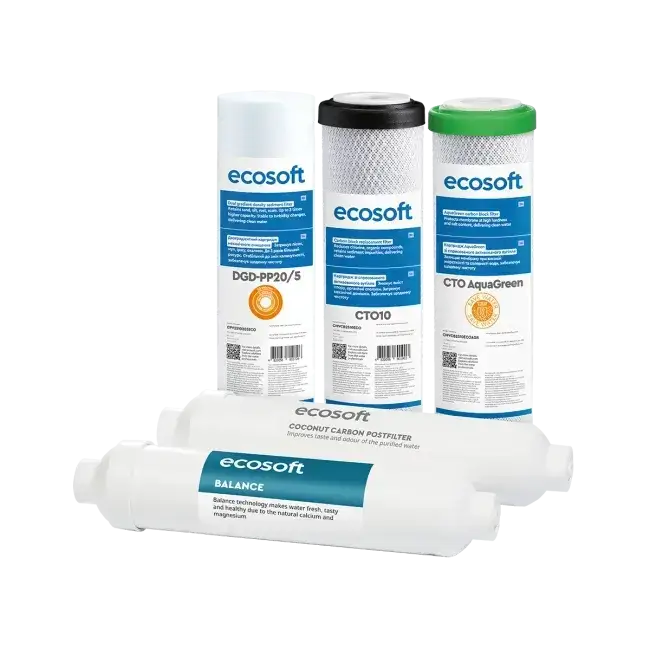
    • The systems involve multiple filtration stages, including pre-filters and post-filters, for a thorough purification.

    • In addition to pollutants, reverse osmosis can also remove beneficial minerals, which can be a drawback.

    • Regular maintenance, such as changing the filters, is necessary for the system to function properly.

    • Choosing reverse osmosis depends on the quality of your water and the specific needs of your household.

    What is reverse osmosis?

    Let's talk a bit about reverse osmosis, since we've already delved into the topic of water quality. Essentially, it's a process by which water passes through a special membrane — a kind of very fine sieve — and impurities are separated out. Think of it as a deep cleanse for the water we drink.

    How does the reverse process work?

    To understand reverse osmosis, we first need to know what regular osmosis is. Osmosis is a natural phenomenon where water moves from a place with less "dissolved stuff" to one with more, in order to reach equilibrium. This happens through a semipermeable membrane. Well, reverse osmosis does exactly the opposite: we apply pressure to water that contains many impurities, forcing it through the membrane but leaving the contaminants behind. It's like pushing water to go where it wouldn't naturally go, just to make it clean. Essentially, the applied pressure exceeds the natural osmotic pressure.

    What does semipermeable membrane mean?

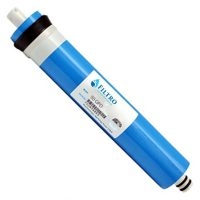
    This semipermeable membrane is the heart of the system. It's made from special materials with extremely small pores — about 1,000 times smaller than a human hair. This means that only water molecules can pass through it, while everything else — bacteria, viruses, heavy metals, dissolved salts, essentially anything that isn't pure water — remains blocked. It's quite effective, removing over 99% of contaminants with a molecular weight greater than 200. However, it's worth knowing that it's not perfect for everything; for example, dissolved gases such as carbon dioxide can pass through more easily, which can make the water slightly more acidic. That's why a remineralization filter is sometimes added afterwards, to bring the water back to a better balance. You can find out more about how the purification process works.

    How does a reverse osmosis system work?

    Let's take a closer look at how a reverse osmosis system actually works, to better understand what happens to our water. This process is a bit different from what we typically know about osmosis. If regular osmosis means water moves from a less concentrated place to a more concentrated one to reach equilibrium, reverse osmosis does exactly the opposite. We essentially force water to move from the more concentrated solution to the less concentrated one, using a pressure greater than the natural osmotic pressure. This happens through a special semipermeable membrane, which acts like an extremely fine sieve. Think of its pores as being 1,000 times smaller than a human hair — about 0.0001 microns. This means only water molecules can pass through; everything else, that is, all kinds of impurities, is stopped.

    The key filtration stages

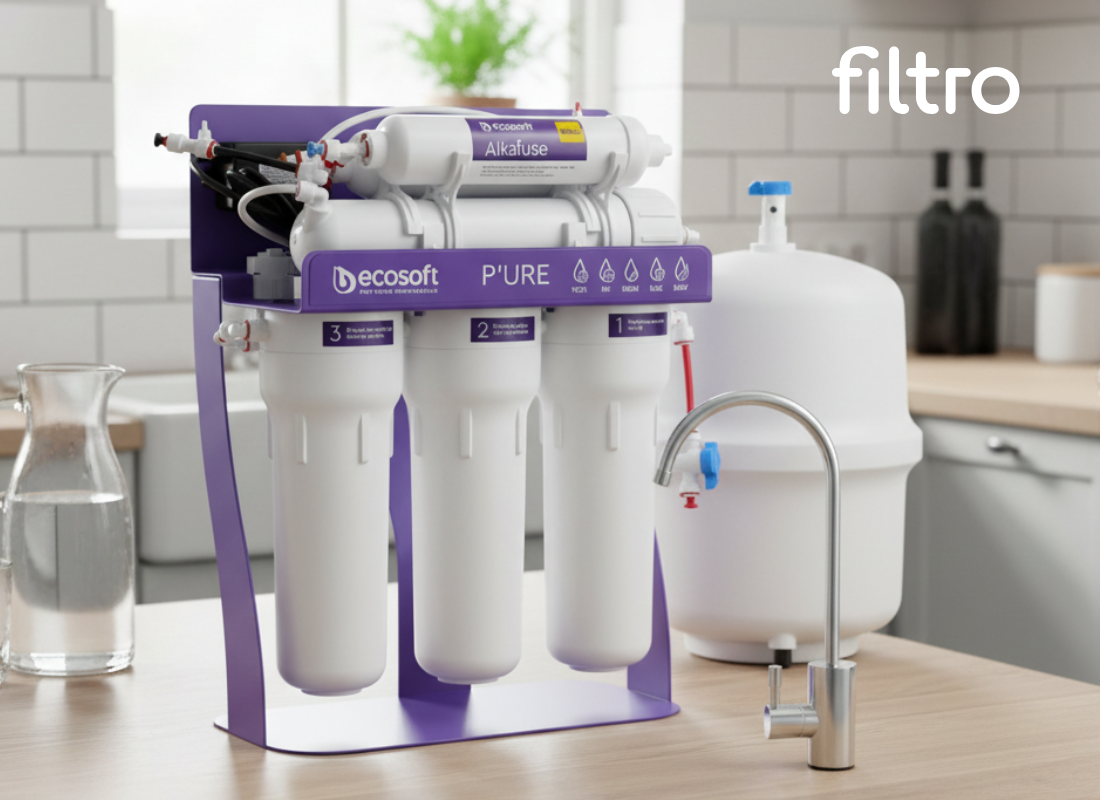
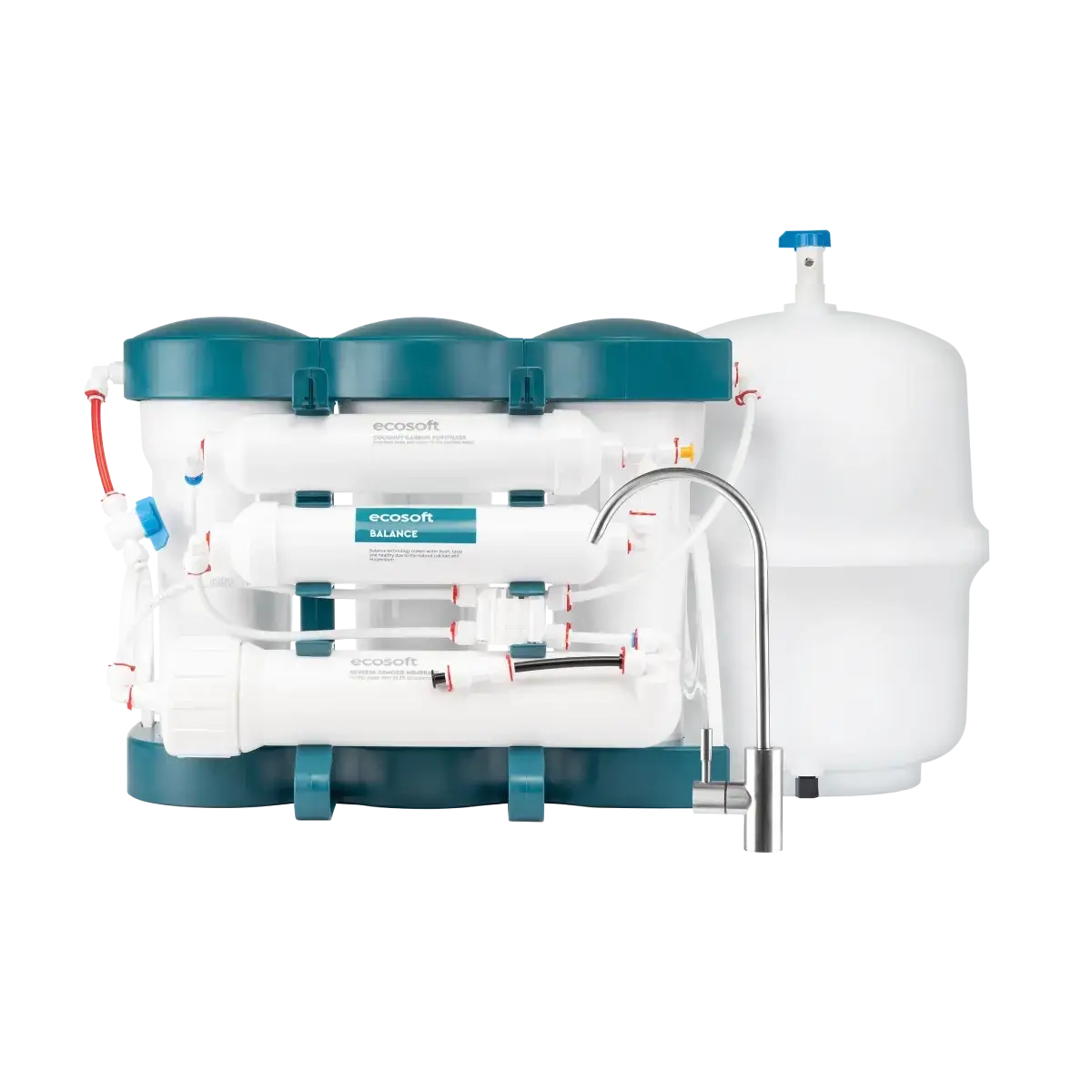
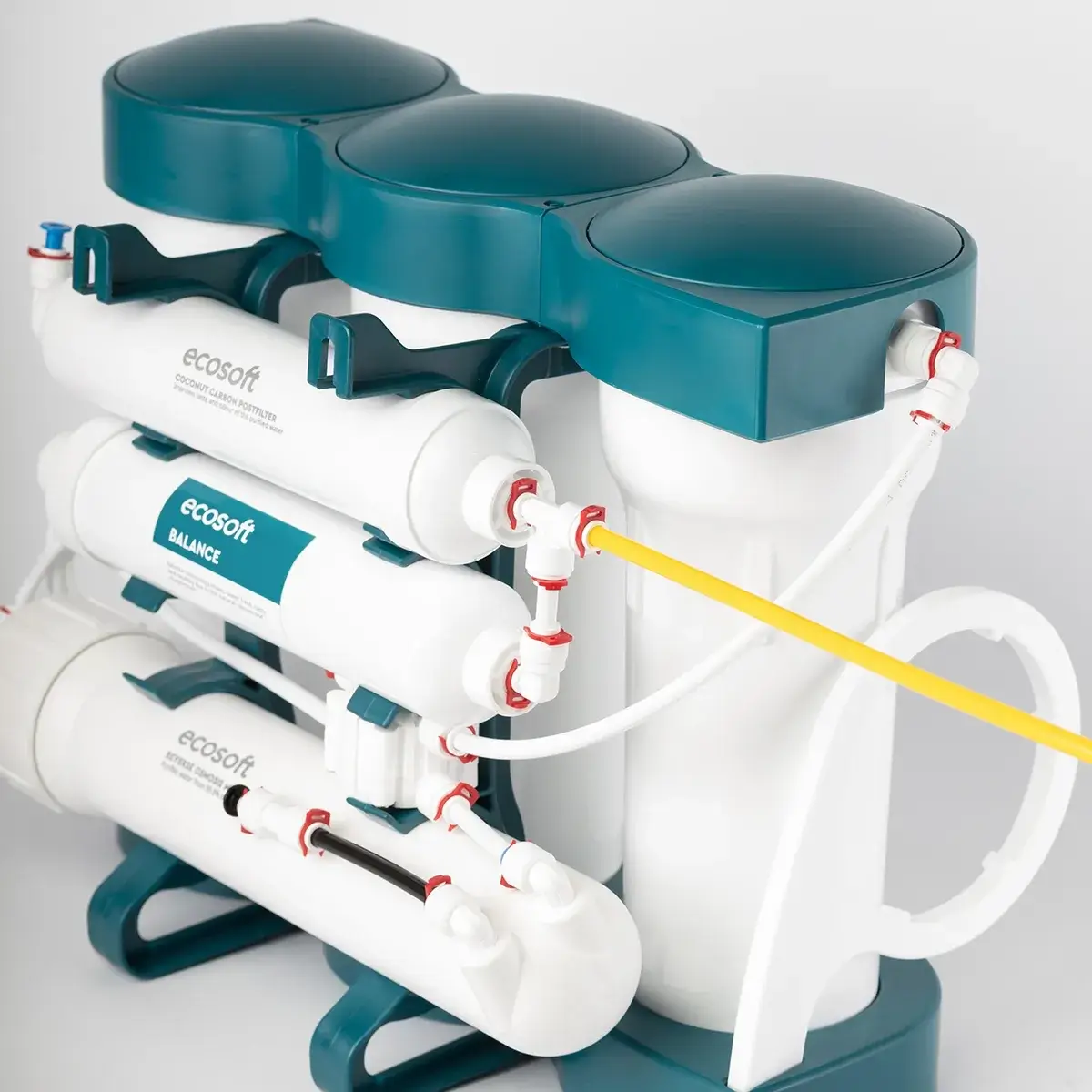
    The filtration process in a reverse osmosis system takes place in several stages, to ensure the water is as clean as possible:

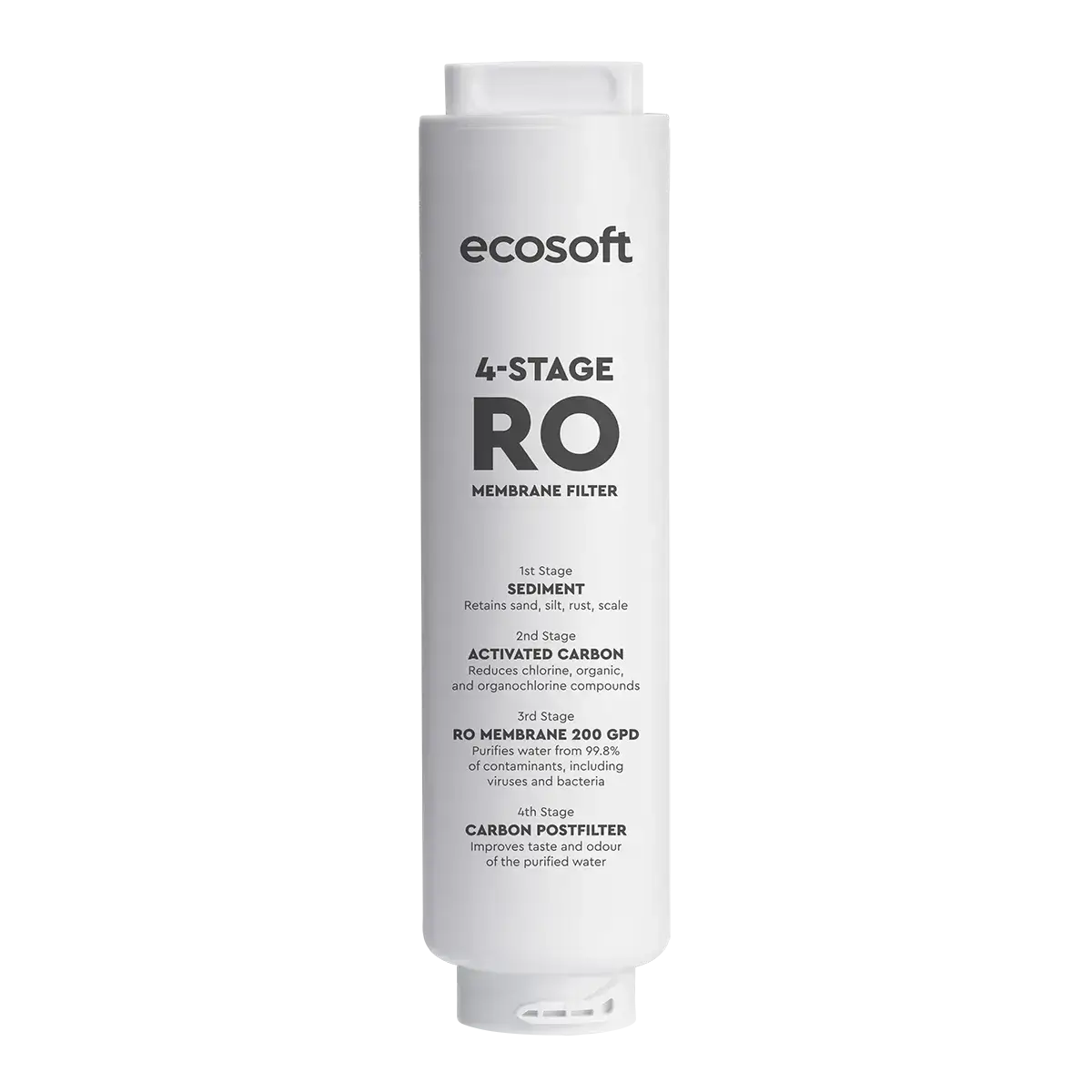
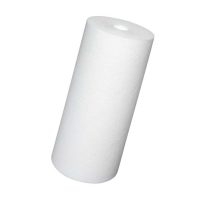
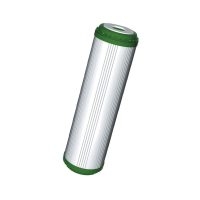
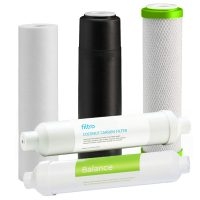
    1. Pre-filtration: The water first passes through mechanical filters, usually one for sediment (which catches sand, rust, and larger particles) and one with activated carbon (which removes chlorine and other chemicals that can damage the membrane). This protects the membrane in the next step.

    2. Reverse Osmosis itself: The water is pushed under pressure through the semipermeable membrane we mentioned. This is where clean water is separated from contaminants. What doesn't pass through the membrane (roughly everything larger than 0.0001 microns) is discharged to the drain.

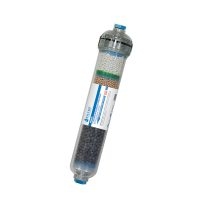
    3. Post-filtration: The water that has passed through the membrane goes through a final filter, usually also with activated carbon. Its role is to eliminate any remaining unpleasant odor or taste, delivering fresh, clean water.

    4. Storage: The purified water is collected in a special pressurized tank, ready to be used whenever needed.

    The role of pre-filtration and post-filtration

    Pre-filtration is extremely important because it protects the heart of the system: the reverse osmosis membrane. Without it, sediment and chlorine could quickly damage the membrane, shortening its lifespan and reducing its efficiency. Essentially, the pre-filters do the heavy lifting at the start, removing larger particles and aggressive chemicals. Post-filtration, on the other hand, comes at the end as a finishing touch. Even though the membrane has done a great job, the water can have a slightly metallic taste or retain traces of dissolved gases. The post-filter, usually with activated carbon, fixes this, giving the water that fresh, clean taste we're looking for. It's like polishing a piece of jewelry after cleaning it — the final result is much more pleasing.

    What happens after filtration

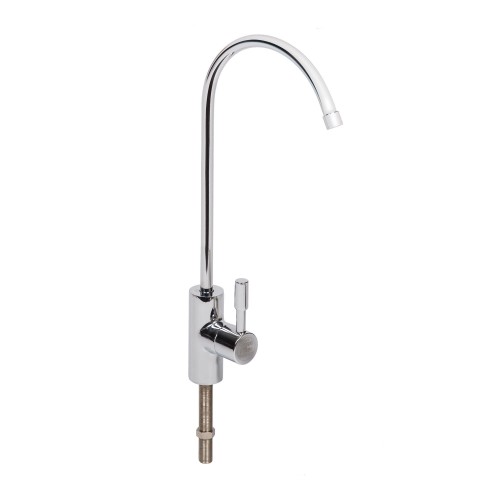
    After the water has gone through all these stages, it reaches the storage tank. From there, it's delivered through a separate dedicated tap for filtered water. What's interesting is that the reverse osmosis process removes almost everything from the water, including beneficial minerals. That's why many modern systems also include a remineralization filter, which adds essential minerals back into the water — such as calcium and magnesium — to balance the pH and make the water more beneficial for the body. This is a major improvement, especially when we consider the quality of tap water which can vary significantly.

    The Advantages of Using Reverse Osmosis

    Let's talk about what a reverse osmosis system brings us. In short, it's a major improvement for the water we drink and use every day.

    Improved taste and odor

    Probably the most immediate thing you'll notice is how the taste and smell of the water changes. Tap water, even if it's potable, can sometimes have a strange taste — of chlorine or other substances. Well, reverse osmosis removes most of these impurities, leaving behind fresh, clean water with a neutral taste. Essentially, you'll be drinking water that actually tastes like water. This also translates to food cooked with it — everything seems to take on a better flavor.

    Health and kitchen benefits

    Beyond taste, we also think about health. This reverse osmosis system is quite effective at removing a wide range of contaminants, from heavy metals such as lead or mercury, to bacteria and viruses. This means we're drinking safer water, especially if we have young children or people with weakened immune systems at home. In the kitchen, this purified water is great not just for drinking, but also for coffee, tea, or when cooking vegetables — it better preserves their nutrients and natural flavor.

    Savings and environmental care

    And now, the part that benefits both our wallet and our conscience. How many of us constantly buy bottled water? Well, with a reverse osmosis system at home, we drastically reduce or even eliminate that need. Think about the long-term savings, but also how much plastic we avoid throwing away. It's a small but important step we take to protect the environment. Less plastic means less pollution, and that's a benefit we all share.

    The Disadvantages and Limitations of Reverse Osmosis

    Although reverse osmosis gives us clean, great-tasting water, it's not all perfect. We need to be aware of a few drawbacks as well. One of them is related to water consumption. To purify a certain amount of water, a reverse osmosis system also generates a quantity of wastewater that contains the removed contaminants. This means that, overall, more water is consumed than what we actually drink.

    Excess water consumption

    In practice, for every liter of pure water obtained, some water is sent to the drain to flush the membrane and remove impurities. The ratio can vary, but it's not uncommon for 2–3 liters of water to be consumed in order to produce 1 liter of filtered water. This can be an issue if you live in an area with water restrictions or if you're very mindful of your water bills.

    Sensitivity to water conditions

    Reverse osmosis systems are quite sensitive to the conditions of the incoming water. Water pressure is an important factor; if the pressure is too low, the filtration process will not be efficient. On the other hand, pressure that is too high can damage the membrane. Water temperature can also affect performance. Very cold or very hot water can reduce filtration efficiency. Even water hardness or the presence of certain chemicals, such as excess chlorine, can affect the membrane's lifespan. That's why it's important to check the quality of your water before installing such a system — you may even want to consult a specialist to make sure the water in your network is suitable.

    Reduction of essential minerals

    Another important aspect is that reverse osmosis makes no distinction between contaminants and beneficial minerals. This means that, along with harmful substances, important minerals for the body — such as calcium and magnesium — are also removed. Although the purified water is safe for consumption, some people prefer to have these minerals in their water. Fortunately, there are solutions for this. Many modern systems include a remineralization filter that adds essential minerals back into the water after the filtration process. Alternatively, you can opt for an additional activated carbon filter, which can help restore some minerals to the water's composition.

    System Maintenance and Installation

    Now that we know what reverse osmosis is and how it works, let's talk about how we keep our system running smoothly. It's like with a car — if you skip the service, it'll let you down.

    When and how to change the filters

    Generally, the pre-filters (those that catch large sediment, chlorine, etc.) and the post-filters should be replaced about once a year. The reverse osmosis membrane, the heart of the system, has a longer life — about 3–5 years — but this depends greatly on how much water you filter and the quality of your source water. If your water is harder, you may need to change it more frequently. It's a good idea to check your system's manual, as it specifies exactly what needs to be replaced and when.

    • Pre-membrane filters: Usually every 6–9 months.

    • Reverse osmosis membrane: Every 1–2 years.

    • Post-membrane filter (remineralization/post-carbon): Every 6–9 months.

    Requirements for Installation

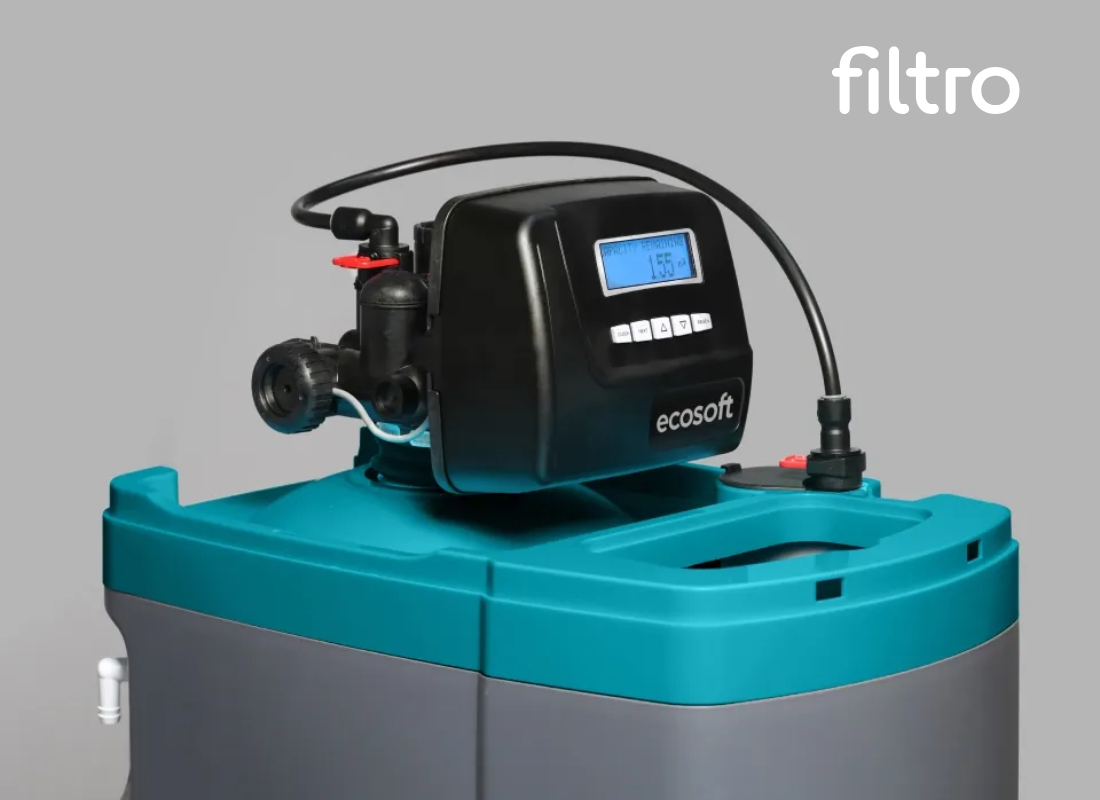
    For the reverse osmosis system to work properly, it needs a few things. First of all, the water pressure from the mains must be adequate — at least 2–3 bar. If the pressure is lower, you may need an additional pump. The installation location matters — usually under the sink, where you have easy access to a water source and a drain. There must be enough space for the system and the water tank, if applicable. The quality of the raw water also matters. If your water already has major issues, such as extreme hardness, you may need additional pre-filtration or even a water softener before the reverse osmosis unit. You can check water hardness to know what to expect.

    Is professional installation recommended?

    Although some say you can install it yourself, especially if you're handy, we recommend calling a professional. A plumber knows exactly how to connect everything correctly to the water supply and drain, to make sure there are no leaks and that the system operates at optimal parameters. Especially if you've never done this before, it's safer and more efficient to let someone experienced handle it. Plus, if something isn't right, it's easier to call them for warranty support or adjustments.

    When is reverse osmosis the right choice?

    We often wonder when it's the right time to say "yes" to reverse osmosis and when it might be overkill. Well, it depends a lot on the type of water we have from the tap or from a well. If the tap water is already quite good, we may not need a complex system. But if we're dealing with more serious issues, reverse osmosis becomes quite an attractive solution. It's important to know what we're drinking, right?

    Tap water quality versus well water

    Tap water is generally treated and tested, but that doesn't mean it's perfect. Sometimes it can have unpleasant tastes or odors due to chlorine or other substances used in treatment. Moreover, even treated water can pick up contaminants from old pipes along the way. Well water, on the other hand, is a different case altogether. Here, the risks are greater: bacteria, nitrates, heavy metals, pesticides — all kinds of things can end up in it, especially if the area is exposed. For well water, especially if it's not regularly tested, reverse osmosis can be an investment in health. It's a way to ensure we're drinking clean water, regardless of what's happening around us. If you'd like to learn more about how it works, you can read about tap water purification.

    Situations when other methods are sufficient

    We don't always need the most advanced system. If our water is already potable and we have no specific issues, a simple faucet filter or even a pitcher filter may be enough. These can improve taste and odor by removing chlorine, for example. They are cheaper and easier to maintain. If the water only has a higher hardness level, a water softener might be a more suitable option, without also removing the beneficial minerals. Think about what bothers you most about the water you drink.

    Testing the water before deciding

    The best advice we can give you is to test your water. Don't rely solely on what you think or what the neighbors say. A water test, whether you do it at home or send a sample to a laboratory, will tell you exactly what your water contains. You'll find out whether heavy metals, bacteria, nitrates, or other substances that could affect your health are present. Based on the results, you can decide what type of filtration is truly necessary. Maybe a simple filter is enough, maybe you need reverse osmosis, or perhaps a combination of methods. It's like going to the doctor: diagnosis first, then treatment.

    What conclusion can we draw?

    So, that's the story with reverse osmosis. We've seen how it works, what it removes from water, and why it's a good option for many of us. It's not a miracle, but it does a great job of bringing cleaner water to our tap. If you're thinking of getting one, we hope this information has helped you understand things better. See all the reverse osmosis systems we have available here. Don't forget — it's a good idea to check the quality of your existing water so you know exactly what you need. And remember to change the filters on time, otherwise there's no point in having the system. Stay healthy!

    Frequently Asked Questions

    What exactly is reverse osmosis?
    Reverse osmosis is a filtration system that uses a special, very fine membrane to purify water. Think of it as a microscopic sieve that retains impurities and lets only clean water pass through. This process helps eliminate many unwanted substances from the water we drink.

    How does a reverse osmosis system work step by step?
    A reverse osmosis system works in several stages. First, the water passes through pre-filters that capture larger particles and chlorine. Then, the water is forced through the special membrane, which retains most contaminants. Finally, the water passes through a carbon filter to improve its taste and odor.

    What kinds of impurities can reverse osmosis remove?
    Reverse osmosis is very effective at removing many types of impurities, such as heavy metals (lead, mercury), bacteria, viruses, nitrates, pesticides, and even microplastics. It essentially retains everything larger than 0.0001 microns, which is incredibly small.

    What happens to the beneficial minerals in the water after filtration?
    Yes, reverse osmosis can also remove beneficial minerals from the water, such as calcium and magnesium. For this reason, many modern systems include a remineralization filter at the end, which adds those essential minerals back into the water for a better taste and for their health benefits.

    How often do we need to change the filters and the membrane?
    To keep the system clean and efficient, we recommend changing the filters (pre-filters and carbon filters) once a year. The reverse osmosis membrane, being the central component, has a longer lifespan — usually between 3 and 5 years — but this also depends on the quality of the water you're filtering.

    When is it recommended to use reverse osmosis?
    Reverse osmosis is an excellent choice if your tap water is not of very good quality, if you live in an area with water quality issues, or if you simply want the cleanest possible water for drinking and cooking. If your water is already very good, other filtration methods may be sufficient.

    Featured products

    Recommended products for a cleaner life

    Your browsing history

    Roata REDUCERILOR!

    Încearcă-ți norocul și poți câștiga reduceri (până la 50%) sau premii în produse.

    * Prin abonare ești de acord cu termenii site-ului și politica de confidențialitate.