































 by Andrei Ceauru

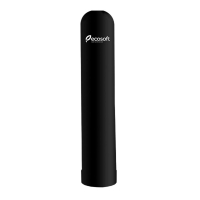
How a Reverse Osmosis System Tank Works
A reverse osmosis filtration system produces purified water gradually. Normally, a reverse osmosis membrane can produce approximately 8–12 liters of water per hour, depending on water pressure and membrane capacity.
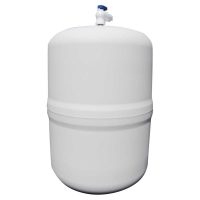
To ensure a constant flow rate at the tap, reverse osmosis systems use a pressurized storage tank.
Structure of the Reverse Osmosis Tank
The tank consists of:
-
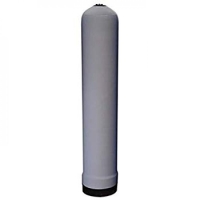
a metal or plastic housing
-
two separate chambers
-
a flexible rubber or polymer membrane
These chambers are:
-
Water chamber – where filtered water accumulates.
-
Air chamber – which creates the pressure needed to push water toward the tap.
On the bottom of the tank there is a valve stem similar to that on car tires, through which you can check or adjust the air pressure in the tank.
What Pressure Should Be in a Reverse Osmosis Tank
The optimal pressure in a reverse osmosis system tank is: 0.4 – 0.6 bar (approximately 6–9 PSI).
This pressure must be measured when the tank is completely empty of water.
If the pressure is:
-
below 0.4 bar – the tank will not be able to push water efficiently toward the tap
-
above 0.6 bar – the tank will fill very slowly or barely at all
In both cases, the system may appear faulty, even though the problem is only the tank pressure.
As a rule, new tanks come preset from the factory, but the pressure can change during transport, installation, or use.
How to Check the Pressure in a Reverse Osmosis Tank
If you notice that:
-
water flows very slowly
-
the tank does not fill completely
-
the flow rate drops quickly after a few seconds
it is recommended to check the pressure in the tank.
Steps for Checking the Pressure
-
Turn off the water supply to the reverse osmosis system.
-
Open the filtered water tap and let water run until the tank is completely empty.
-
Locate the air valve stem at the bottom of the tank.
-
Unscrew the protective cap.
-
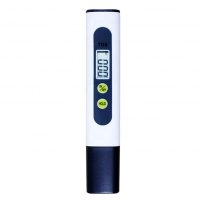
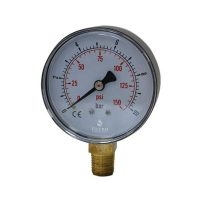
Connect a pressure gauge (automotive or electronic).
-
Read the pressure value.
If the pressure is between 0.4 and 0.6 bar, the tank is working correctly. If the pressure is lower, it needs to be adjusted.
How to Adjust the Pressure in a Reverse Osmosis Tank
Adjusting the pressure is a simple operation that can be done with:
-
a hand pump
-
a bicycle pump
-
an automotive compressor
Steps for Adjusting the Pressure
-
Make sure the tank is completely empty.
-
Unscrew the valve stem cap.
-
Connect the pump or compressor.
-
Pump air slowly, checking the pressure periodically.
-
Set the pressure to 0.4 – 0.6 bar.
-
Disconnect the pump and close the valve stem cap.
It is important not to overinflate the tank with air, as too much pressure can damage the internal membrane.
How to Tell If the Reverse Osmosis Tank Is Faulty
During the pressure check, a few clear signs of a fault may appear:
1. Water coming out of the valve stem
If when you press or unscrew the valve stem water comes out, it means the internal membrane is ruptured.
In this case: the tank cannot be repaired and must be replaced.
2. The tank is very heavy even when no water is flowing
This may indicate that the membrane is stuck or damaged.
Other Reasons Why the Reverse Osmosis System Produces No Water
If the tank pressure is correct, the problem may be caused by other components of the system.
- Low water pressure in the home
Reverse osmosis systems work optimally at a minimum of 3 bar supply pressure.
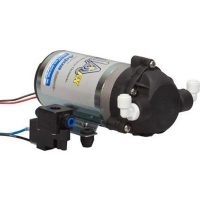
If the pressure is lower, it is recommended to install a pressure pump for reverse osmosis. - Clogged cartridges or membrane
Cartridges should be replaced every 6–12 months, and the membrane every 12–18 months, depending on water quality. - Bent or blocked connections
After installation or maintenance, some tubes may be crushed or bent, reducing the flow rate.
Conclusion
The pressure in the tank of a reverse osmosis system is an essential factor for the correct operation of the filter. Incorrect pressure can lead to:
-
very low water flow rate
-
a tank that doesn't fill
-
inefficient system operation
Checking and adjusting the pressure is a simple operation that can quickly resolve many system problems.
For optimal performance of your water filter, it is recommended to periodically check the tank pressure, the condition of the membrane, and timely replacement of filter cartridges.
Frequently Asked Questions
- What pressure should a reverse osmosis system tank have?
The correct pressure in a reverse osmosis system tank is approximately 0.4 – 0.6 bar (6–9 PSI). This value should be checked when the tank is completely empty of water. If the pressure is too low, water will flow very slowly from the tap. If it is too high, the tank will fill very slowly. - How do I check the pressure in a reverse osmosis tank?
To check, you need to turn off the water supply to the system, open the filtered water tap, and completely drain the tank. Then unscrew the cap from the valve stem at the bottom of the tank and connect an automotive pressure gauge to measure the air pressure in the tank. - Why does water flow very slowly from a reverse osmosis filter?
Low water flow can be caused by low pressure in the tank, clogged filter cartridges, a worn reverse osmosis membrane, or insufficient water pressure in the home network. Checking the tank and replacing the cartridges are the first recommended steps. - Why doesn't the reverse osmosis system tank fill up?
The tank may not fill if the air pressure inside is too high, if the water supply pressure is too low, or if the osmosis membrane is clogged. Also, bent hoses or closed valves can reduce water flow. - How do you adjust the pressure in a reverse osmosis tank?
The pressure can be adjusted with a hand pump or automotive compressor. After completely draining the tank, the pump is connected to the valve stem and air is introduced until the pressure reaches approximately 0.4 – 0.6 bar. - What happens if the tank pressure is too low?
If the pressure is too low, the tank will not be able to push water efficiently toward the tap. As a result, water will flow very slowly or the flow rate will drop rapidly after a few seconds. -
What does it mean if water comes out of the reverse osmosis tank valve stem?
If water comes out when pressing or unscrewing the valve stem, it means the internal membrane of the tank is ruptured. In this case the tank can no longer function correctly and must be replaced. -
What water pressure is required for a reverse osmosis system to work correctly?
Most reverse osmosis systems work optimally at a water pressure of at least 3 bar. If the pressure is lower, the system may produce water very slowly, and installing a pressure pump for reverse osmosis can solve the problem.
Contact us if you need a new tank or service for your purification system.